Keri Caves vs Blue Caves: Which Zakynthos Cave Trip to Choose
Every summer morning on Zakynthos, hundreds of travelers stand before rental chalkboards in town trying to solve the same puzzle: do you drive north to the famous arches, or south toward the cliffs? The debate over keri caves vs blue caves usually comes down to what kind of day you want on the water, because despite sharing a small Greek island, these two geological wonders feel like entirely different worlds. One trip locks you into wild northern winds and postcard sights, while the other pulls you into sheltered bays where sea turtles glide underneath your keel.
I have explored both systems multiple times across different seasons, hiring self-drive speedboats, boarding crowded public excursion vessels, and paddling sea kayaks right up against the limestone walls. Both destinations deliver that shocking Ionian blue water that looks fake until your hand breaks the surface. Deciding between them depends on where you are staying, how you handle choppy swells, and whether you care more about photographing dramatic sea arches or floating peacefully in hidden grottos with your mask and snorkel.
Book your keri caves experience:
Location and Access: North Coast vs South Coast
Zakynthos is shaped roughly like an arrowhead pointing northwest. The Blue Caves sit at the very northern tip, carved into the sheer white walls of the Skinari cape. Getting there from the main town takes roughly 48 minutes along winding mountain switchbacks that pass through quiet inland villages like Katastari and Volimes. If you base yourself in the south around Laganas or Kalamaki, expect an hour and fifteen minutes behind the wheel before you even step onto a dock. Most northern boat trips leave from the port of Agios Nikolaos or right off the wooden jetty below the Skinari lighthouse.
The Keri Caves slice into the Marathia peninsula along the island's southwestern flank. The primary launch point for exploring this coastline is the laid-back coastal village of Limni Keriou, also known locally as keri lake zakynthos. The name comes from an ancient tar marsh mentioned by Herodotus, though today it is just a sleepy seaside strip with a pebbled beach, eucalyptus trees, and several family-run boat hire stands. Reaching this southern harbor takes only 25 minutes from the airport or central resorts, making it far more accessible if you hate long drives before morning coffee.
The scenery en route also sets a different tone. Driving north feels rugged and austere, dominated by dry stone walls, gnarled olive trees, and goats wandering across the asphalt. Heading toward Keri Lake Zakynthos is lush and green, weaving past pine slopes before opening onto the massive, calm curve of Laganas Bay.
Pro tip: If you visit the Blue Caves from Skinari, walk down the 140 stone steps behind the windmill tavern; you can jump directly off the concrete platform into the neon-blue water without paying for a boat tour at all.
What the Caves Look Like Inside
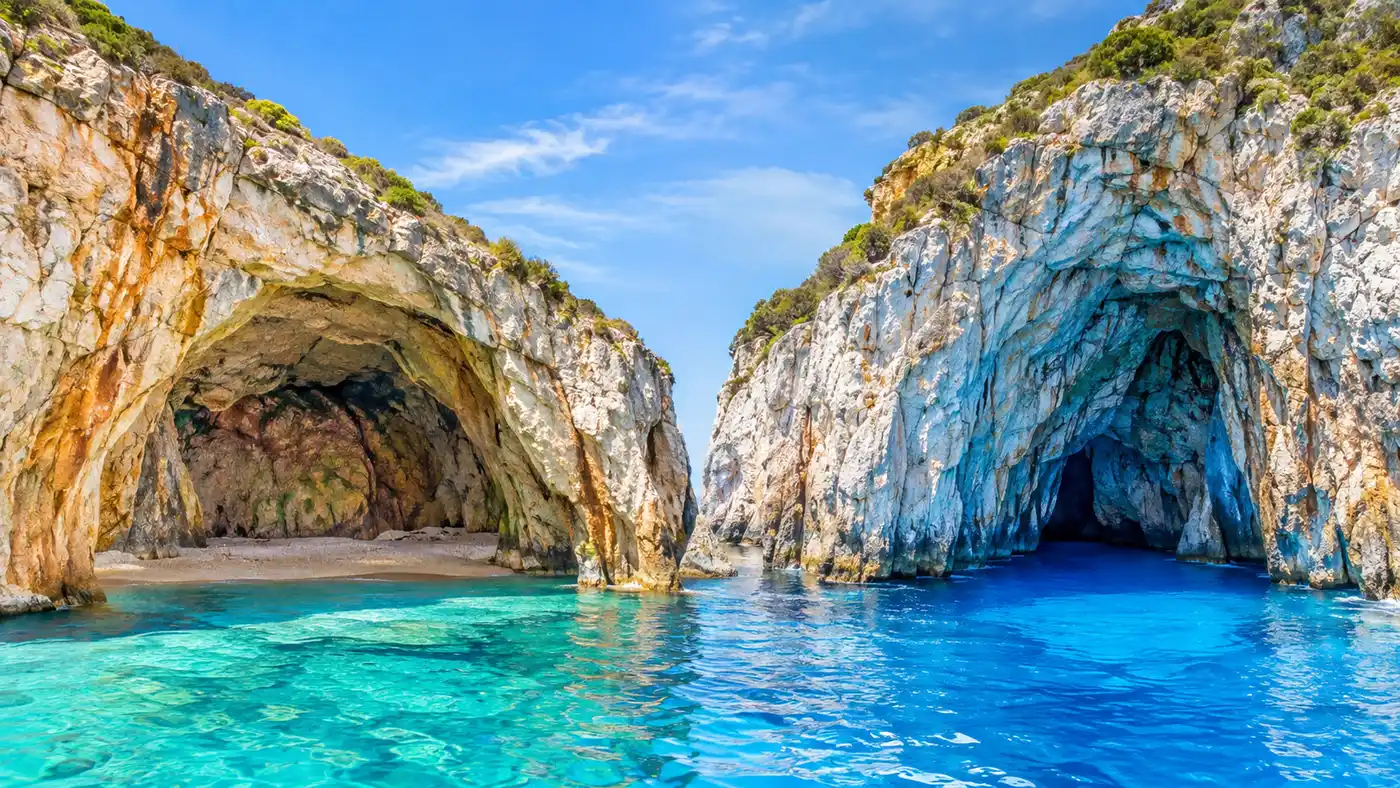
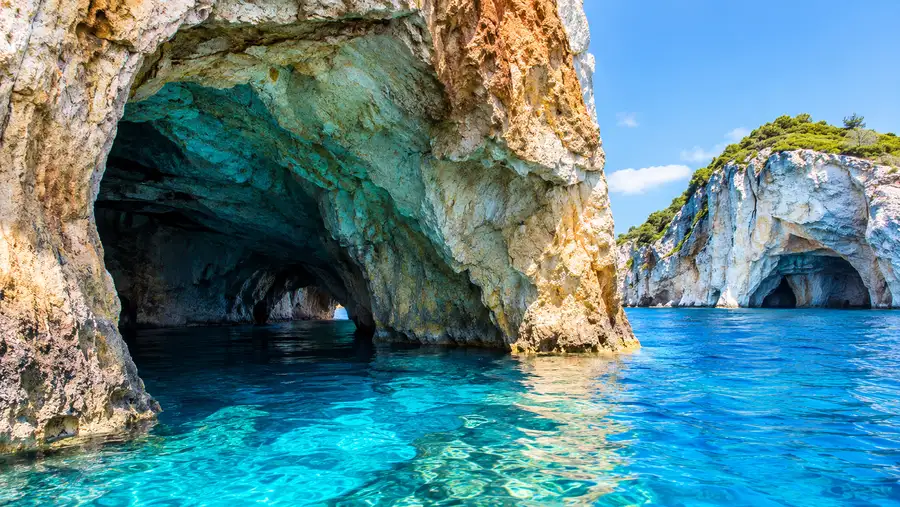
Scale and light behave differently in each place. The Blue Caves are essentially a sequence of hollowed-out sea arches and vaulted limestone chambers created by thousands of years of heavy wave erosion. What makes them famous is the reflection. The seabed here consists of brilliant white sand and crushed shells about six to eight meters down. When mid-morning sunlight strikes the water through the archways, it bounces off the pale bottom and turns everything - the cave ceiling, the boat hull, your bare arms - an eerie, luminescent shade of electric blue. Some arches are broad enough for small excursion craft to motor clean through, while others are narrow slots where only a kayak can slip inside.
The Keri Caves are deeper, darker, and visually moodier. Instead of freestanding arches offshore, you get soaring coastal cliffs that drop hundreds of feet straight into turquoise water, punctured by deep slits and gaping cavern mouths. A few of these openings stretch back 40 meters into total shadow where the air smells damp and cold. One chamber features a tiny interior shingle beach where you can climb out of the water; another has a collapsed roof where sunlight pours through a vertical shaft like a spotlight in an empty theater.
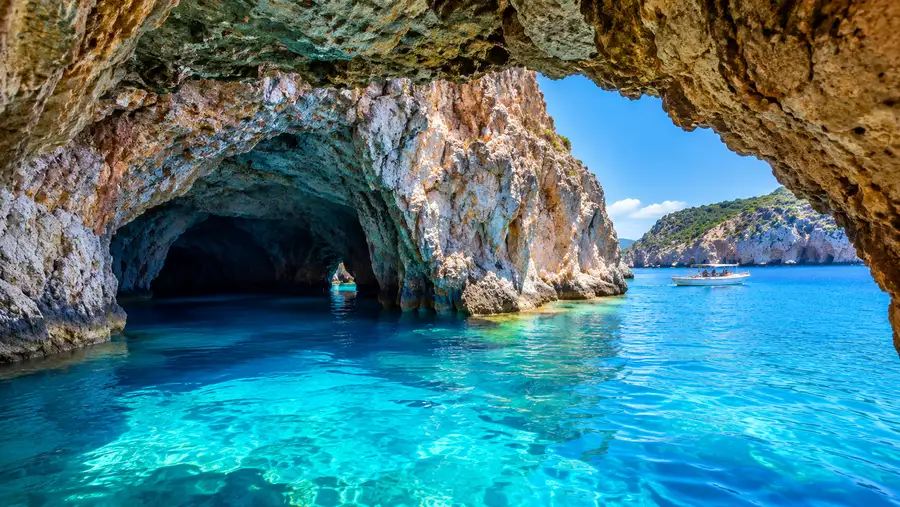
Small boats can nudge their bows right into several Keri grottos. Once the engine is killed, you hear nothing except the rhythmic slap of swells against the stone and the occasional drip of mineral water from hanging stalactites. The water here tends toward rich sapphire and jade rather than the milkier baby-blue tones of the north.
Note: Flash photography inside the deeper Keri chambers rarely works because the dark rock absorbs the light; bring an action camera with good low-light sensitivity instead.
Tour Combinations and Nearby Highlights
Nobody rents a boat just to look at rock holes for twenty minutes. The real decision between a trip to the south or a run up north hinges on what else you get to see along the way. Both cave networks are sold as part of half-day coastal packages, but the supporting attractions are completely different.
A Blue Caves trip is almost universally paired with Navagio, the famous Shipwreck Beach. You board a boat at Agios Nikolaos, speed out to the limestone arches for photos, and then round the northern cape to gaze at the rusted freightliner stranded on the white gravel. However, rough seas frequently cancel the Shipwreck leg, and recent geological surveys mean tourists are often banned from walking onto the sand due to falling rocks. You end up viewing the cove from behind a rope line on the water, sharing the bay with two dozen other rumbling diesel tour boats.
A southern trip out of Keri gives you a far more varied itinerary. Most travelers combine the caverns with a run past the towering Mizithres rocks, two massive white sea stacks rising out of bright turquoise water where an offshore earthquake exposed raw limestone in 2018. From there, you can cross Laganas Bay to drop anchor off Marathonisi Cave and Turtle Island, an uninhabited sanctuary shaped like a turtle where loggerhead turtles (Caretta caretta) mate and lay eggs during the summer months.
You can easily plan your day around specialized boat tours around the Keri caves that spend three hours idling between swimming spots, sea turtle viewing zones, and secluded coves that remain completely inaccessible by car.
Book your keri caves experience:
Comparing the Experiences
To help balance your budget and expectations, this breakdown shows what a typical independent outing looks like for each destination during the main holiday season from June through September.
| Feature | Blue Caves (North) | Keri Caves (South) |
|---|---|---|
| Main departure ports | Agios Nikolaos, Skinari Port | Limni Keriou (Keri Lake), Porto Roma |
| Average group tour price | €20 to €30 per person | €25 to €35 per person |
| Self-drive boat rental (per day) | €140 to €220 plus fuel | €110 to €180 plus fuel |
| Typical sea conditions | Choppy swells, strong afternoon breeze | Calm mornings, sheltered southern bays |
| Major companion attraction | Shipwreck Beach (Navagio) | Marathonisi Island & Mizithres Rocks |
| Best visiting window | 08:30 AM to 11:30 AM | 09:00 AM to 02:00 PM |
Boat Rentals, Water Conditions, and Practicalities
The northern tip of Zakynthos sits exposed to the open Ionian Sea. By 1:00 PM on most summer days, the local wind picks up noticeably. Waves bounce hard off the vertical cliffs around Skinari, turning a gentle cruise into a bumpy, spray-soaked ride that tests even iron stomachs. If you hire a private 30-horsepower runabout from Agios Nikolaos without an experienced skipper, navigating the chop around the headland requires constant attention on the throttle.
Down at Keri Lake Zakynthos, conditions are generally much friendlier for amateur boaters. The water inside Laganas Bay remains glassy flat throughout the morning, shielded from offshore winds by the bulk of Mount Skopos and the Marathia ridges. Even novice skippers who have never touched an outboard engine can comfortably steer a small rental boat along the southern coastline toward the caves.
Before booking either trip, consider these key operational details:
- Fuel costs: northern boat runs burn more gas fighting heavy currents, adding around €45 to your rental bill compared to about €28 for a gentle putter around Keri.
- Wildlife encounters: the south coast sits inside the protected National Marine Park of Zakynthos, meaning boat speeds are heavily restricted in certain zones to protect sea turtles.
- Cave clearance: large group vessels carrying 50 passengers must idle outside the smaller Blue Caves, while small southern skiffs can motor completely inside the Keri arches.
- Snorkeling visibility: both locations offer underwater clarity exceeding 25 meters on calm mornings, though water temperatures at Keri are often a degree or two warmer.
Timing your arrival makes a huge difference. For the Blue Caves, morning light is essential. If you arrive past 1:30 PM, the sun moves behind the towering cliffs, throwing the cavern mouths into shade and deadening that famous neon glow. The Keri Caves face southwest, catching sunlight straight into the afternoon, which gives you a wider window to enjoy your day without rushing an early alarm.
Here is a straightforward way to decide which coast deserves your rental money:
- Pick the Blue Caves if: seeing the northern cliffs and Navagio is on your bucket list, you don't mind a long drive, and you want to photograph the most famous sea arches in Greece.
- Pick the Keri Caves if: you plan to rent your own small boat, you want calm water for swimming with kids, or you are eager to spot loggerhead turtles feeding in the bay.
- Pick the Blue Caves if: you are staying on the northeast coast around Alykes, Alykanas, or Tsilivi, making the northern journey simple and quick.
- Pick the Keri Caves if: you crave a relaxed afternoon anchored off quiet pebble beaches with towering cliff views away from the mega-tour boats.
Frequently Asked Questions about keri caves vs blue caves
Can you swim inside both cave systems?
Yes, swimming is allowed at both locations, provided your tour boat anchors safely away from the cavern mouth. At the Blue Caves, you jump into deep, open sea directly off the boat ladder, while the Keri Caves feature shallower inlets and small gravel shelves where you can stand up inside the rock overhangs.
Which trip is better for families with young children?
The Keri Caves are significantly better for young children. The sea around Limni Keriou and Laganas Bay is calmer, boat rides are shorter, and children love watching for turtles surfacing for air near Marathonisi Island before heading to the grottos.
Can I visit both cave systems in a single day?
You can do it by car, but it requires a very long, tiring day. You would need to start at Skinari by 8:30 AM for the Blue Caves, drive an hour and a half south through the mountains at lunchtime, and board an afternoon boat from Keri Lake by 2:00 PM. It is much better to split them across two separate days.
Quick Reference
- Blue Caves: best light before 11:30 AM
- Keri Caves: far calmer water for self-drive rentals
- Blue Caves route pairs with Shipwreck Beach
- Keri route pairs with Marathonisi Turtle Island
- Limni Keriou is 25 minutes from the airport
Book your keri caves experience:
The Bottom Line
If you force me to pick just one, I lean toward renting a small boat out of Keri Lake Zakynthos almost every time. The northern arches around the Blue Caves are stunning marvels of geology, but the crowded docks at Agios Nikolaos and the rough afternoon swells can turn the experience into an exhausting chore. Down south, you get complete freedom. You can drift quietly into cavern shadows, motor out past the towering white pinnacles of Mizithres, drop anchor over bright turquoise sand for a quiet picnic, and perhaps spot a wild loggerhead turtle surfacing right alongside your boat on the journey home.
Read more about keri caves.